Candidate for Treasurer, 2026 - 2028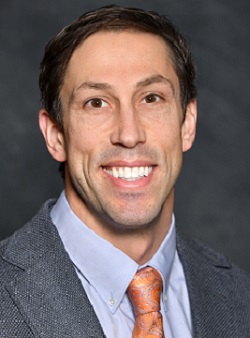 MARK BLAZEY, MS, CRNA, DNP MARK BLAZEY, MS, CRNA, DNPFast Facts About Mark
A 2008 BSN graduate of the University at Buffalo, Mark earned his MSN in Nurse Anesthesia (2013) and his DNP (2020) from Northeastern University. With 13 years of clinical experience, 6 of them in NYS, his practice has spanned independent CRNA models in rural New York to major medical centers in the Rochester area. Mark has been a dedicated leader within NYSANA, serving on the Board of Directors since 2020 and leading the association as President from 2024–2026. Currently the Immediate Past President of NYSANA, Mark is transitioning into academia as the incoming Program Director for the University at Buffalo’s Nurse Anesthesia program. What are the biggest challenges facing the profession?In my opinion, the biggest challenges facing the profession of anesthesia are related to, but distinct from, the current challenges facing New York State CRNAs. They are two separate questions. The New York Challenge: New York is long overdue for practice and title recognition, as well as an expanded scope of practice for CRNAs. Achieving this has been, and must continue to be, NYSANA’s priority. Every strategic action we take as an organization must move the needle toward those goals; if it does not, it remains a secondary priority. The National Challenge: As CRNAs have earned title recognition and proved their merits in other states through independent practice, the national profession faces a different hurdle: parity in reimbursement for services. Nationally, CRNAs are a vital, cost-saving resource. We do not necessarily have a shortage of skilled hands in anesthesia; we have a problem with resource allocation. Hospitals and outpatient centers continue to employ supervision ratios that are no longer sustainable in our current healthcare system. Under the ACA, CMS is required by law to reimburse CRNAs and physician anesthesiologists at the same rate. This is logical: CRNAs are licensed to provide all anesthesia services with the same safety standards and outcomes. In fact, CRNAs are the only nursing specialty authorized by Medicare Part B to receive direct reimbursement at 100% of the physician fee schedule.
What experiences, ideas, connections, or resources do you have that would allow you to help with these challenges?My experience on the Board of Directors and as president of NYSANA has allowed me to plan, lead, and participate in critical legislative strategies. I am intimately familiar with the legislative process, the key players in the capital, and the specific language needed to move policy. I have been on the front lines during both our successes (such as achieving prescriptive authority in Massachusetts) and our setbacks (our ongoing push for title recognition in New York). We’ve made great legislative progress in the past 3-5 years. We’ve also had record meeting attendance, an increase in PAC contributions, increased member engagement through district events, clarity and actionable goals for our committees, and an expanded pipeline of NYSANA leadership. I’m grateful to have been part of many of these successes and these experiences have given me the perspective necessary to refine our approach and persist. Name one skill or strength you possess that is unmatched by your colleagues or peers?While I work with an amazing team of dedicated people with complementary talents, I believe my high operational capacity is a unique strength. What do you love about being a CRNA? What drew you to the profession?I enjoy the cerebral aspect of anesthesia—the need to think through problems and develop novel solutions to age-old issues. I enjoy working around expected and unexpected obstacles rather than simply pushing through them. Please provide at least one idea you believe will engage or involve members to advance NYSANA’s mission.We currently face a significant gap in participation; we struggle to get even 10% of our membership to vote in online elections that take less than 10 minutes. This apathy stems from many factors—fatigue, fear of employer blowback, or simply a desire to keep work and life separate. My vision is to diversify the "Entry Points" for engagement while actively engaging members who have been less active. Many CRNAs don't want to be "political," and that is okay. However, NYSANA offers value in public relations, continuing education, peer wellness, and resident liaison programs. My goal is to ensure there is something for every single CRNA and RRNA that fits their specific interests and schedule. |
Our Sponsors